The Art of Effective Communication

Communication skills are vital. By developing communication skills, it is possible to avoid many potential misunderstandings. The art of effective communication is vital in any profession, as well as in personal lives. Outlined below are four communication strategies vital to the art of effective communication.

Importance of Listening

Communication involves more than talking. Listening is a vital part of effective communication. When listening, avoid assuming you interpreted the message correctly. Ask yourself, “Is this what the speaker intended?”1

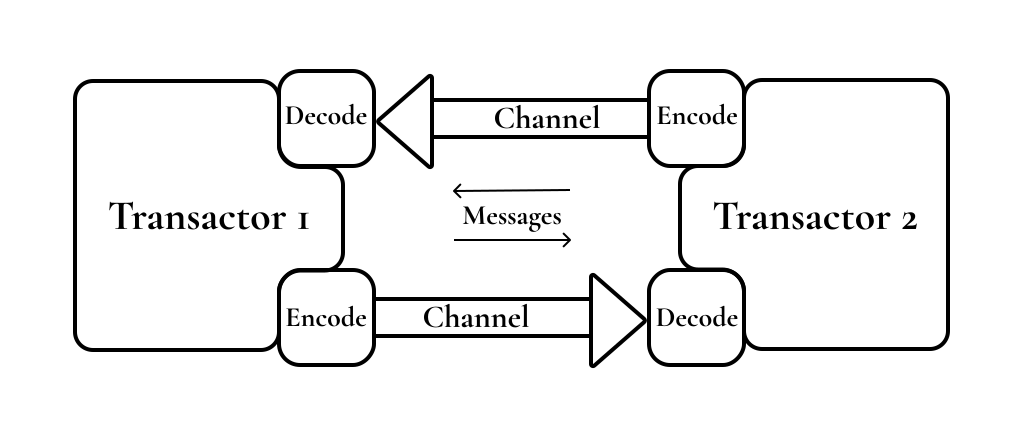
The transactional model of communication depicts both parties simultaneously sending and receiving communication.1

Diagram of Transactional model of communication.

Transactional Model of Communication

In the transactional model of communication, each person, or "transactor" encodes and sends messages through various channels. Simultaneously, each transactor receives and decodes messages from various channels.1

  • Transactors: The parties involved in communication
  • Channels: The means of communication—spoken, text, body language, etc.
  • Encode: Converting the meaning of the message into the channel
  • Decode: Determining the meaning of the received message

Nonverbal Communication

You are always communicating, even when you are not trying to. Mastering nonverbal communication plays a major role in the art of effective communication.

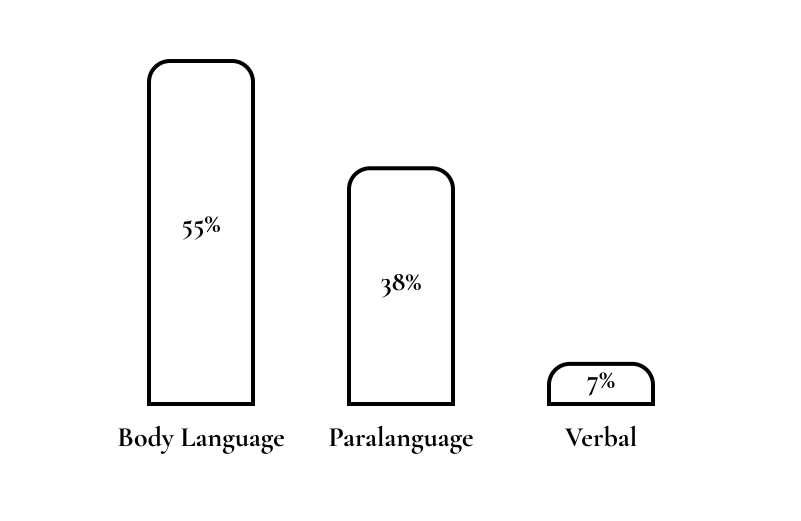
According to studies, nonverbal communication accounts for over 90% of communication.2

Graph depicting the percentage of communication that is nonverbal. 55% is Body Language, 38% is Paralanguage, and 7% is Verbal.

Nonverbal Communication

Out of your entire communication package, 55% corresponds with body language, and 38% corresponds with paralanguage. This means that 93% of the communication package is nonverbal, and only 7% is verbal communication.2

Body language is communication that does not involve speaking. Paralanguage refers to aspects aspects about spoken communication including vocal tone.3

Receiver-based Approach

Adopting a recipient-oriented method of communication, rather than an egocentric approach, is key. This means adapting your communication and taking responsibility to ensure it can be understood.

Sender-based communication is the opposite of receiver-based communication. Sender-based communication assumes everyone thinks the same.1

Line artwork depicting two people communicating

Sender-based vs Receiver-based

Sender-based
Sender-based communication assumes everyone else thinks the same. Someone demonstrating sender-based communication assumes that misunderstandings are the fault of the receiver.1

Reciever-based
Reciever-based communication involves adapting communication based on the needs of the receiver. Someone using receiver-based communication takes responsibility to ensure the message is understood properly. When listening, a receiver-based communicator does not assume they always perfectly interpret messages as intended.1

7 Cs of Communication

Apply the strategies of the 7 Cs of communication, which are valuable for practicing thoughtful, effective communication.

The 7 Cs of communication were first suggested in 1952 by Scott M. Cutlip and Allen H. Center in their book “Effective Public Relations.”4

Artistic pattern containing the 7 Cs of Communication

7 Cs of Communication4

Clear
Ensures that the receiver comprehends the message as intended

Concise
Is straightforward: uses as few words as possible without changing the meaning

Concrete
Is vivid rather than vague: provides solid examples

Correct
Is factually accurate, uses proper grammar and appropriate language

Coherent
Is organized: the connection of ideas flows logically

Complete
Contains all necessary information: leaves no room for ambiguity

Courteous
Acknowledges the recipient’s feelings and position: is polite and considerate.

Conclusion

The Art of Effective Communication is an essential skill for both personal and professional lives. The consequences of poor communication are significant. Therefore, developing the art of effective communication is imperative.

References

  1. Knudsen, K. G., Ruth Fairchild, Bev, & Lease-Gubrud, D. (2023, July 18). An Introduction to Communication Theory. Ridgewater College. https://socialsci.libretexts.org/@go/page/79259
  2. Knudsen, K. G., Ruth Fairchild, Bev, & Lease-Gubrud, D. (2023, July 18). Verbal Communication. Ridgewater College. https://socialsci.libretexts.org/@go/page/79269
  3. Knudsen, K. G., Ruth Fairchild, Bev, & Lease-Gubrud, D. (2023b, July 18). Nonverbal Communication. Ridgewater College. https://socialsci.libretexts.org/@go/page/79270
  4. Kharbach, M., PhD. (2023, May 30). The 7 CS of Effective Communication - Educators Technology. Educators Technology. https://www.educatorstechnology.com/2023/05/7-cs-of-effective-communication_24.html